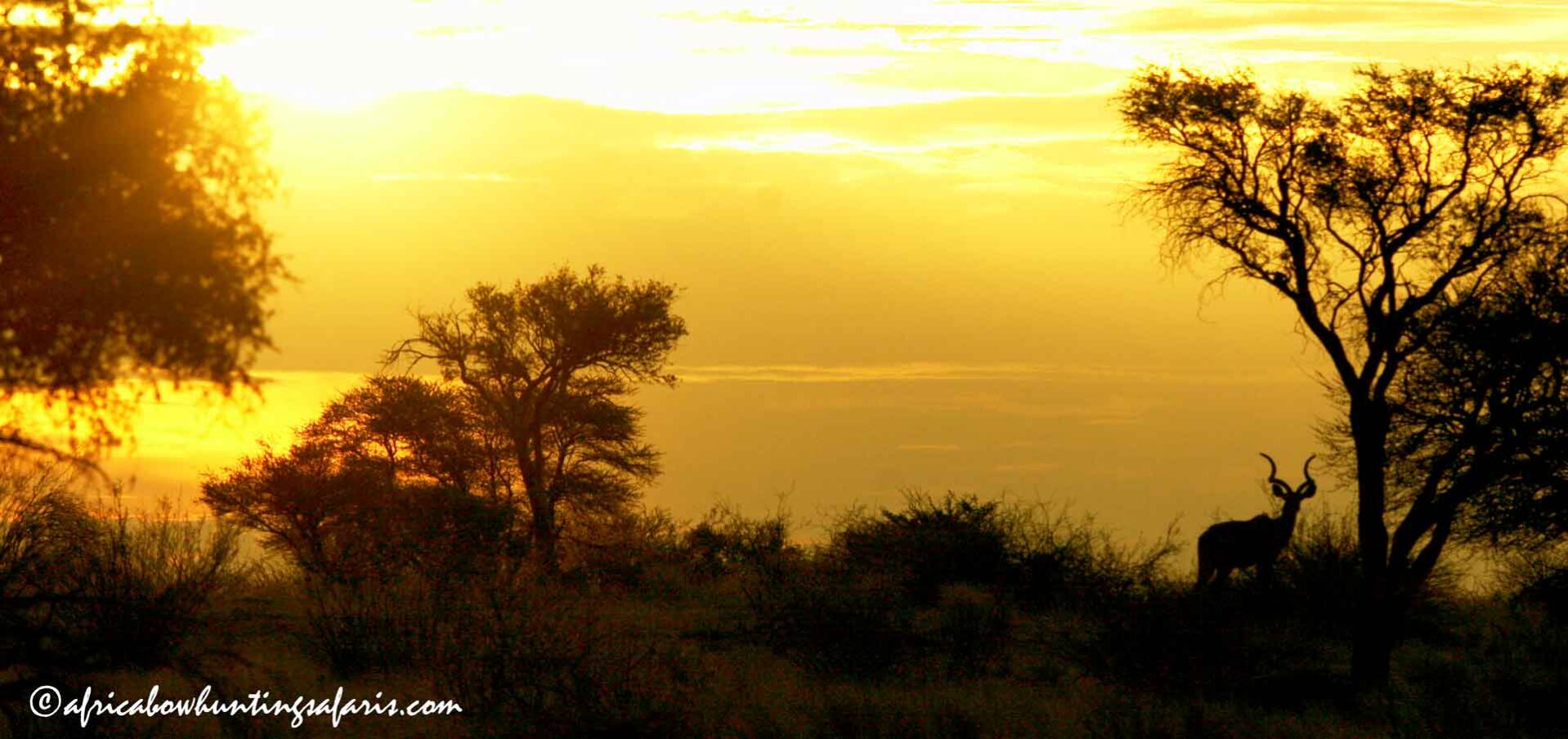
Bow hunting kudu South Africa

Bow hunting kudu South Africa for the best trophy kudu bow hunts

This page is dedicated to giving expert advice on bow hunting kudu South Africa. We are committed to ethical bow hunting practices in the form of sustainable bow hunting, allowing us and future generations to continue our noble bow hunting sport.

Our team of experienced professional hunters, trackers and skinners have years of knowledge and expertise in bow hunting trophy kudu. We believe in responsible hunting that preserves the ecosystem and ensures the survival of wildlife populations.

When you choose to hunt with us, you’re not just participating in a sport; you’re contributing to the conservation of these magnificent animals and investing in the hunting rights of our future generations.

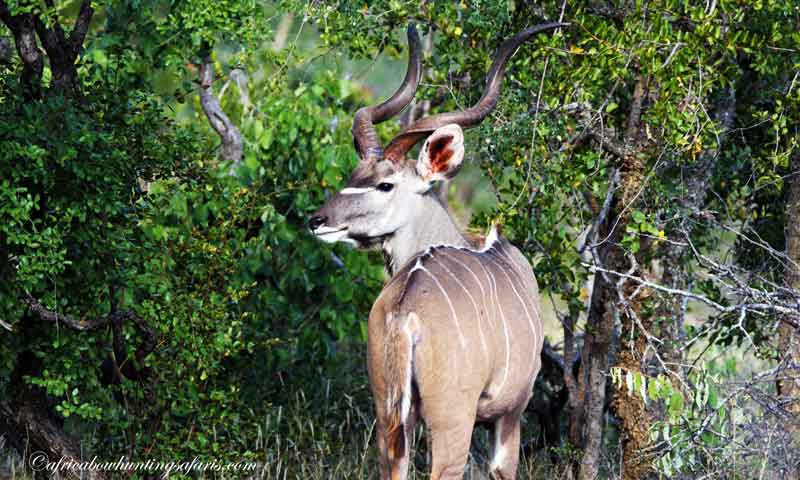
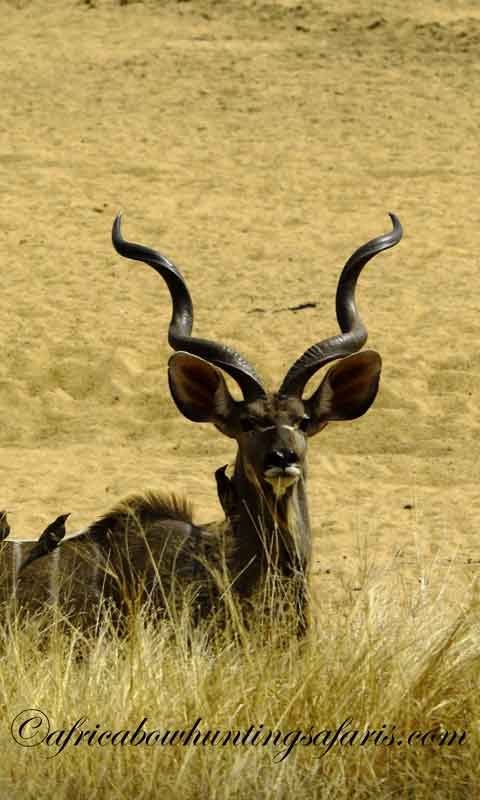
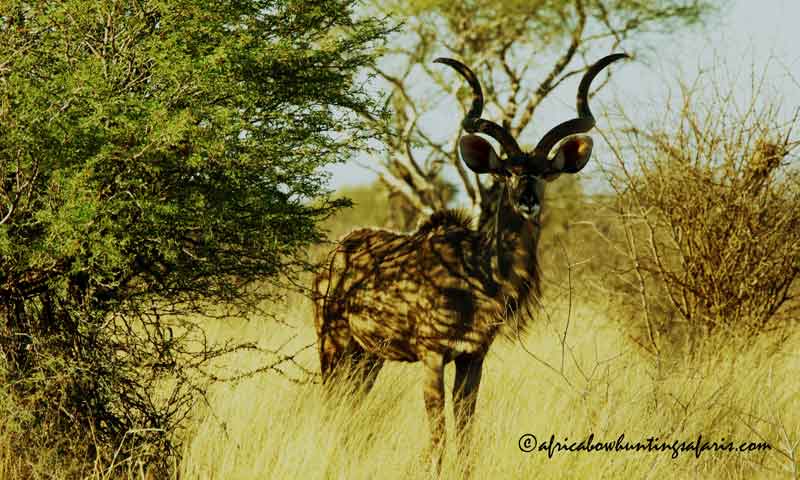
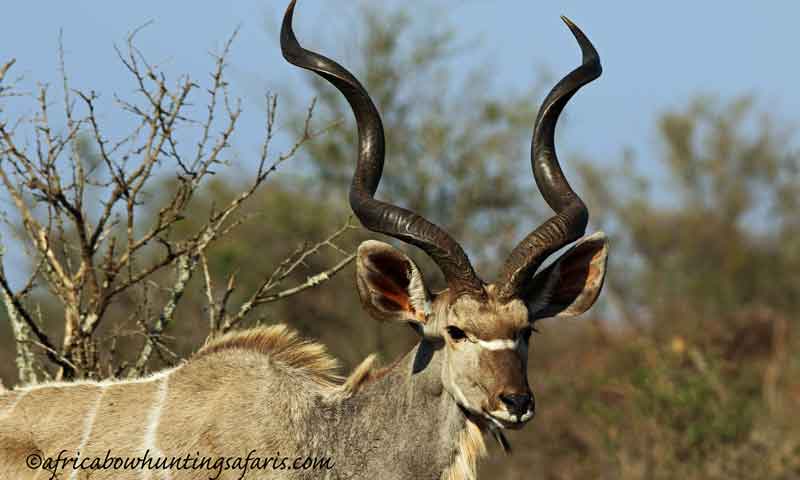
Kudu, renowned for their majestic spiral horns, are the pinnacle of plains game trophies for devoted bow hunters worldwide. Bow hunting trophy kudu, while slightly smaller than elk, offer a formidable challenge and unparalleled rewards. With their keen senses and elusive nature, a successful kudu hunt requires precision, patience, and a deep understanding of their behavior.
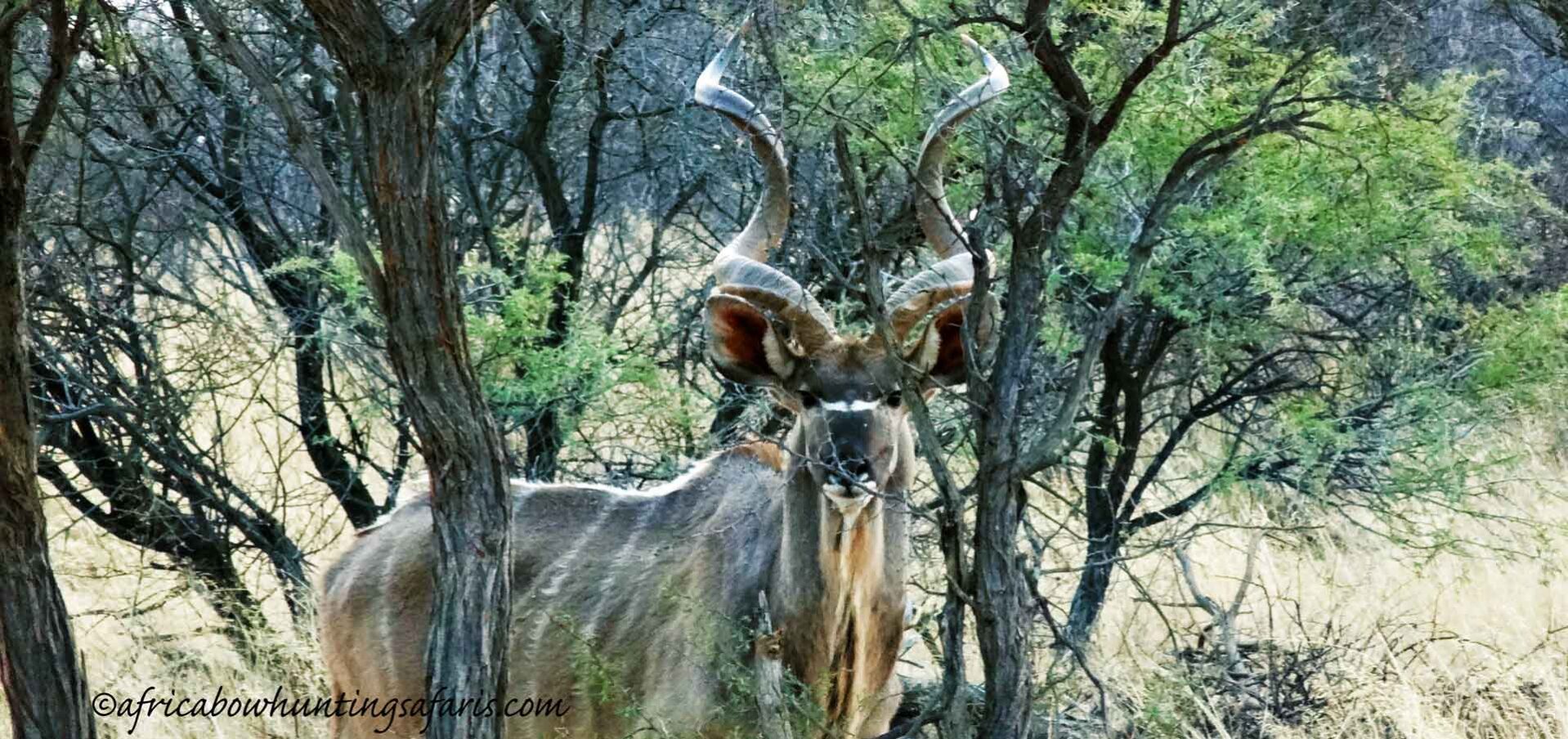
Bow hunting trophy kudu South Africa

Bow hunting kudu safaris South Africa

Bow hunting kudu demands the right equipment and a meticulous approach. Beware of a clean pass-through shot as these animals are often found in groups, making accidental injuries a potential risk. Bow hunting kudu safaris South Africa do not come cheap; therefore, make sure of your shot and do not add additional cost by wounding a trophy kudu due to rushing the shot.

Their radar-like ears detect the slightest disturbance, making stealth and a well-placed blind essential.

Dominant bulls often lead smaller herds of cows and calves, forming a tight-knit social unit. During the rut (late April to mid-May), these bulls compete fiercely for mating rights, sometimes joining bachelor herds or becoming solitary.

Achieving a successful kudu hunt is a testament to a bow hunter’s skill and dedication. Take your time, assess the shot carefully, and release your arrow with confidence. Remember, patience is key, as these magnificent creatures are not easily fooled.

Our bow hunting kudu safaris South Africa will put you in a position to make your life ambition come true!

Essential equipment for bow hunting kudu South Africa

Ensure you’re equipped for a successful kudu bow hunting adventure in South Africa with the best kudu hunting outfitters South Africa. This guide outlines the key considerations for selecting the right equipment, including kinetic energy, arrows, shot distance, broadheads, and draw weight. The following aspects all adhere to the South African bow hunting regulations, as set out in the: NATIONAL ENVIRONMENTAL MANAGEMENT: BIODIVERISTY ACT, 2004 (ACT NO. 10 OF 2004)

  1. Kinetic Energy (KE) for kudu:

The minimum kinetic energy (KE) to bow hunt kudu is 50 ft / lb 

  1. Arrows for kudu:
  • minimum arrow velocity of 245 fps is required for effective kudu bow hunting.
  • arrow weight of 380 grains (gr) is required to ensure the best penetration along with your broad head choice.
  1. Expected shot distance:

Average expected bow shooting distance on kudu from our bow hunting blinds are seldom further than 19 to 25 yards. 

  1. Broad heads:
  • Choose broadheads designed for hunting large game, such as fixed-blade or expandable broadheads:
    • broad heads for kudu in South Africa is a minimum of 75 grains (gr) to 125 grains (gr)
    • The best broad heads for bow hunting kudu is a cut-on-impact 3-blade-broadhead. These would include, but will not be limited to:
      • Rage II mechanical broad head
      • a cut on contact fixed 3-blade broad head
      • mechanical broad head
      • a fixed blade 2-blade broad head with bleeders
      • You decide which brand broad head is your favorite to use based on your experience. 
  1. Minimum draw weight:

Draw weight for bow hunting kudu is any increment greater than minimum draw mass. Any draw weight equal to or greater than 70 lb is good for kudu. 

  1. Sights and release aids: personalizing your setup

The choice of bow type, sights, and release aids for hunting kudu is highly personal and depends on your individual preferences and shooting style. Consequently, a trigger release might work well for one archer, whereas a thumb release will be more suitable for another.

Experiment with different options to find the combination that feels most comfortable and allows you to shoot accurate consistently. Consider factors such as:

  • Bow type: Compound, recurve, or longbow?
  • Sight type: Pin sights, scope sights, or hybrid options?
  • Release aid: Trigger release, thumb release, index finger release, or handheld release?

The best equipment is the equipment that works best for you. Take the time to test various options and find the setup that enhances your performance and enjoyment of bow hunting.


Key considerations for your kudu bow hunting safari South Africa:
  • Draw weight: Select a bow with adequate draw weight to ensure a powerful shot.
  • Shot placement: Aim for the vital organs, such as the heart or lungs, for a clean kill.
  • Stealth: Minimize noise and movement to avoid alarming the kudu.
  • Patience: Kudu are wary and require a calm, deliberate approach.
  • Equipment: Invest in high-quality equipment, including a reliable bow, sharp arrows, and appropriate broadheads.

By following these guidelines and embracing the challenge, you can experience the thrill of hunting one of the most sought-after trophies in the world.
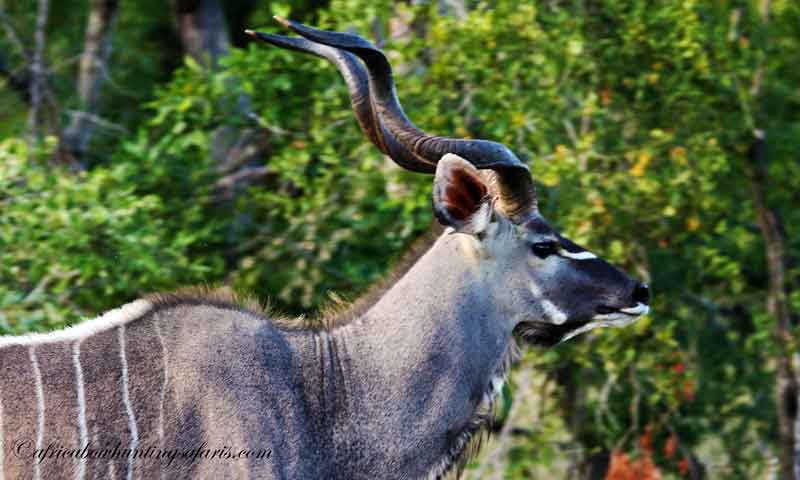
Kudu bow hunting South Africa
Kudu bow hunting tips and tricks
Best time of year to bow hunt kudu South Africa
Sights and release aids bow hunting kudu South Africa
Kinetic energy KE for bow hunting kudu South Africa
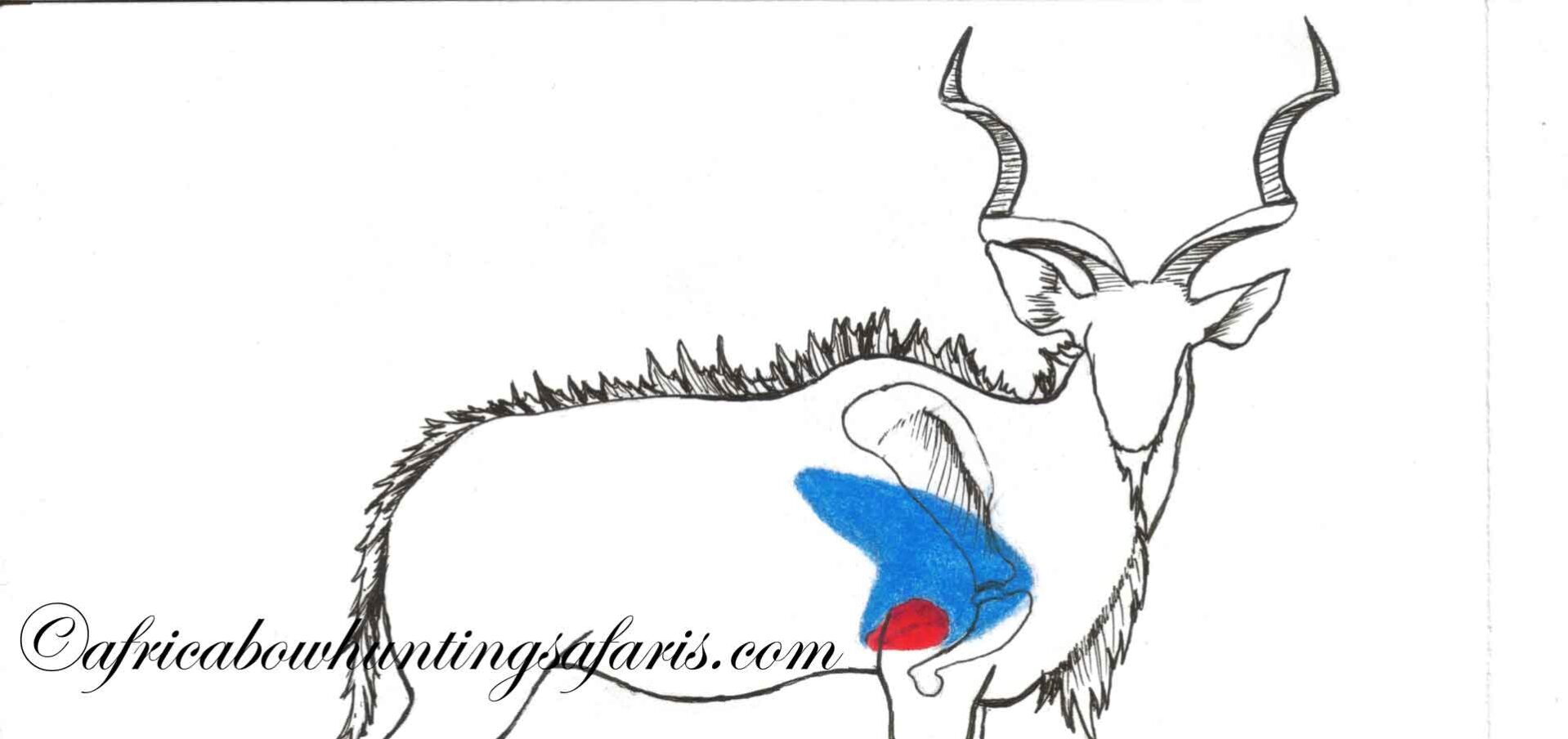
Bow hunting kudu shot placement diagram

Precise shot placement is crucial when bow hunting kudu.

Here are the primary areas of shot placement to focus on:
  1. Vitals:
    • Heart: The heart is a prime target, but it’s relatively small and can be difficult to hit cleanly.
    • Lungs: The lungs are a larger and more forgiving target. A well-placed shot will cause immediate incapacitation.
  2. Avoid shots to the shoulder joint: A shot to the shoulder joint can be devastating, but it’s a challenging target for bow hunters and seldom effective.
Key considerations:
  • Angle: The angle of the shot can significantly impact the effectiveness of the hit. A broadside shot is generally preferred.
  • Distance: The distance to the animal will influence the shot placement. A closer shot allows for a more precise aim.
  • Bone: Avoid shooting through bone, as it can deflect the arrow and cause a less-than-lethal wound.
  • Ethics: Always prioritize a clean and ethical kill. If you’re unsure about your shot, it’s better to hold off and wait for a better opportunity.

Tips for a successful shot:

  • Patience: Wait for the right shot opportunity. Rushing a shot can lead to mistakes.
  • Accuracy: Focus on aiming precisely at the vitals.
  • Ethical hunting: Prioritize a clean kill to minimize suffering.
  • Practice: Regular practice will improve your shooting skills and increase your chances of a successful hunt.

Bow hunting requires patience, skill, and a deep understanding of the animal’s anatomy and behavior. By focusing on these key areas and practicing good hunting ethics, you can increase your chances of a successful and ethical hunt.
Kudu behavior and habitat

Kudu behavior and habitat

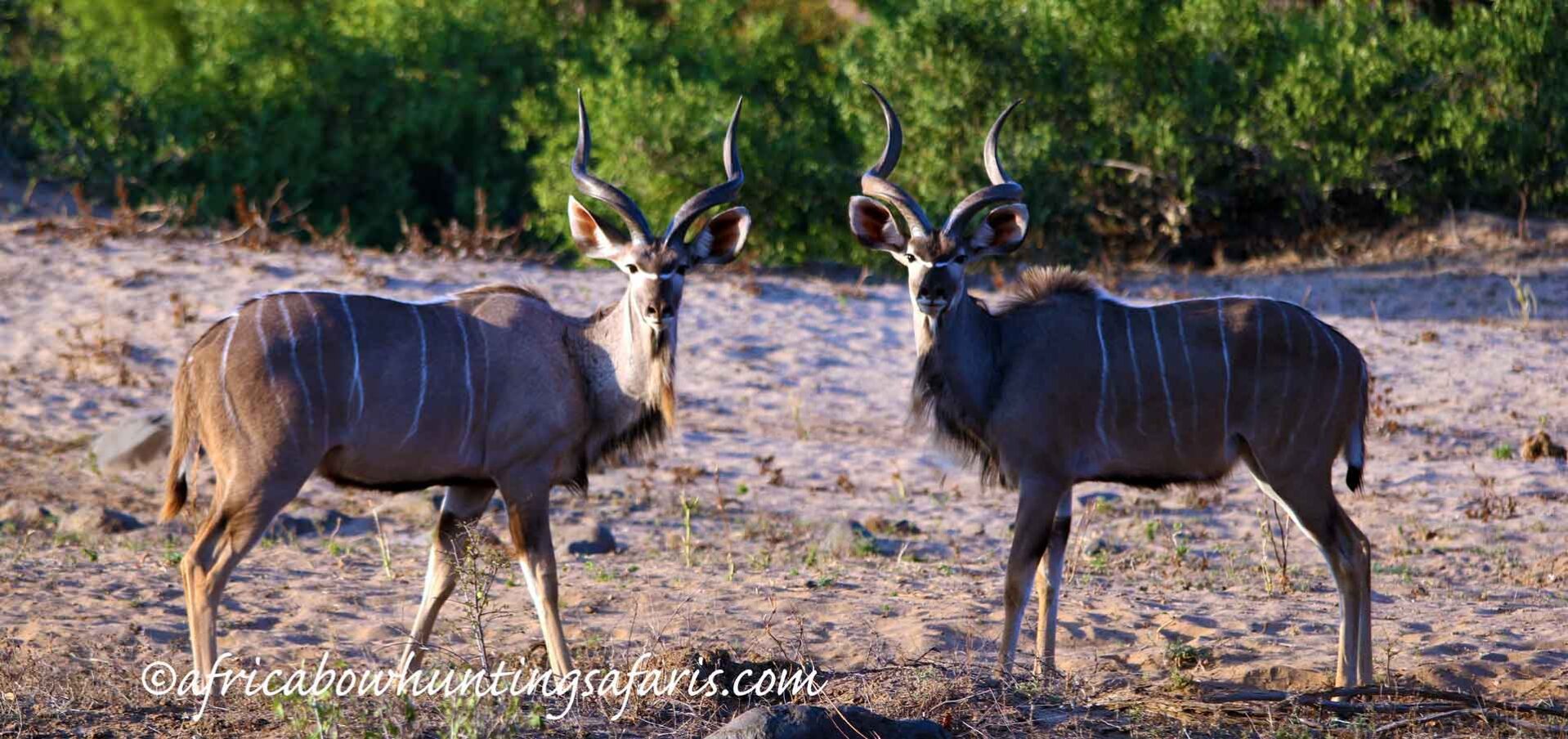
Kudu are large antelopes native to Africa, including South Africa. They are known for their distinctive spiral horns, which are more prominent in males.

Habitat

Kudu are adaptable animals and can be found in a variety of habitats, including:

  • Thickets: They often inhabit dense, thorny thickets, which provide them with protection from predators.
  • Bushlands: Kudu are also commonly found in bushlands and savannas.
  • Mountainous regions: In some areas, kudu can be found in mountainous regions.

Behavior

  • Social Structure: Kudu are typically found in herds, which can vary in size from a few individuals to less than 20 animals of varying ages.
  • Diet: Kudu are herbivores and primarily feed on leaves, grass, shoots pods, and fruits. They are known to be browsers rather than grazers.
  • Rut: The rutting season for kudu typically occurs during early winter and lasts to about mid-May. During this time, males compete for the attention of females.
  • Territorial behavior: Males may become territorial during the rut and defend their breeding rights against other males.


Impact of climate on hunting

  • Winter dry months: The winter months in South Africa (end April through end October) can be dry, which can lead to a concentration of kudu in areas with water sources. This can make hunting easier, as kudu are more predictable in their movements.
  • Summer rainfall: While summer rainfall is essential for the survival of kudu and other wildlife, it can also negatively impact hunting. Heavy rainfall can make it difficult to track kudu and can also limit visibility. As a result, kudu then have no reason to frequent waterholes due to an abundance of water available in the bush.

In summary, kudu are adaptable animals that can be found in a variety of habitats in South Africa. Their behavior and movements can be influenced by factors such as the rut, climate, and availability of food and water. Understanding these factors can be helpful for bow hunters seeking to increase their chances of a successful hunt.
Best time of year to bow hunt kudu

Best time to bow hunt kudu

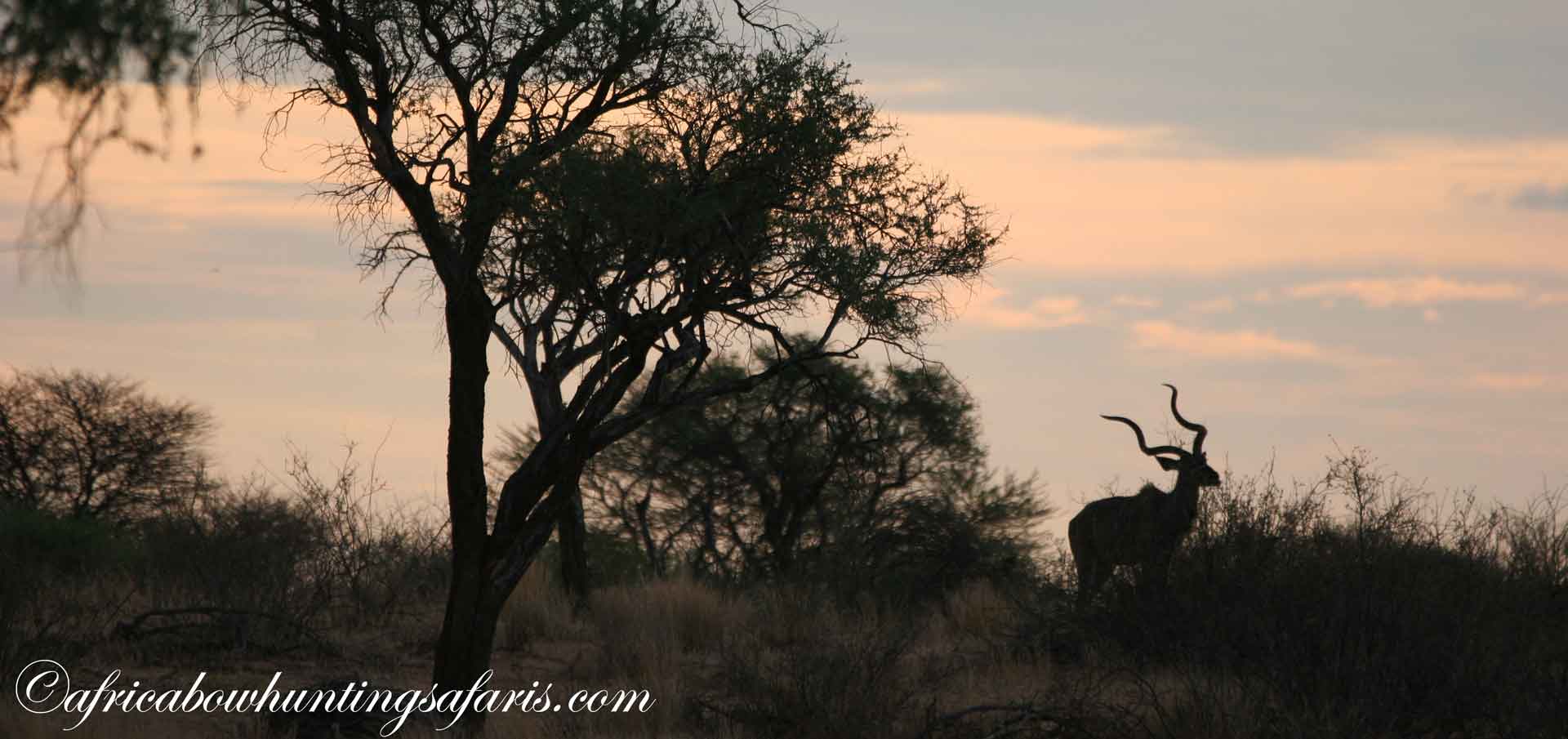
The best time to bow hunt kudu in South Africa is generally considered to be the late fall and early winter, which typically coincides with the rutting season. Here’s why:

  • Increased activity: During the rut, male kudu become more active and territorial as they compete for females. This increased activity can provide more opportunities for hunters to spot and stalk kudu.
  • Predictable behavior: The rutting behavior of kudu is relatively predictable, making it easier for hunters to anticipate their movements and set up ambushes.
  • Better visibility: The weather is typically cooler and drier during the late fall and early winter, which can improve visibility for hunters.
  • Neck growth: During the rut, kudu bulls may develop thicker necks due to increased testosterone levels. This thicker neck helps support the weight of the horns during fights with other bulls.
  • Home range: Kudu bulls typically have a home range, which is the area they frequent most often. This home range can vary in size depending on factors such as food availability and competition from other bulls.

However, it’s important to note that the specific timing of the rut can vary slightly from year to year, depending on local conditions.
Bow hunting kudu tips and tricks South Africa

Kudu bow hunting tips and tricks

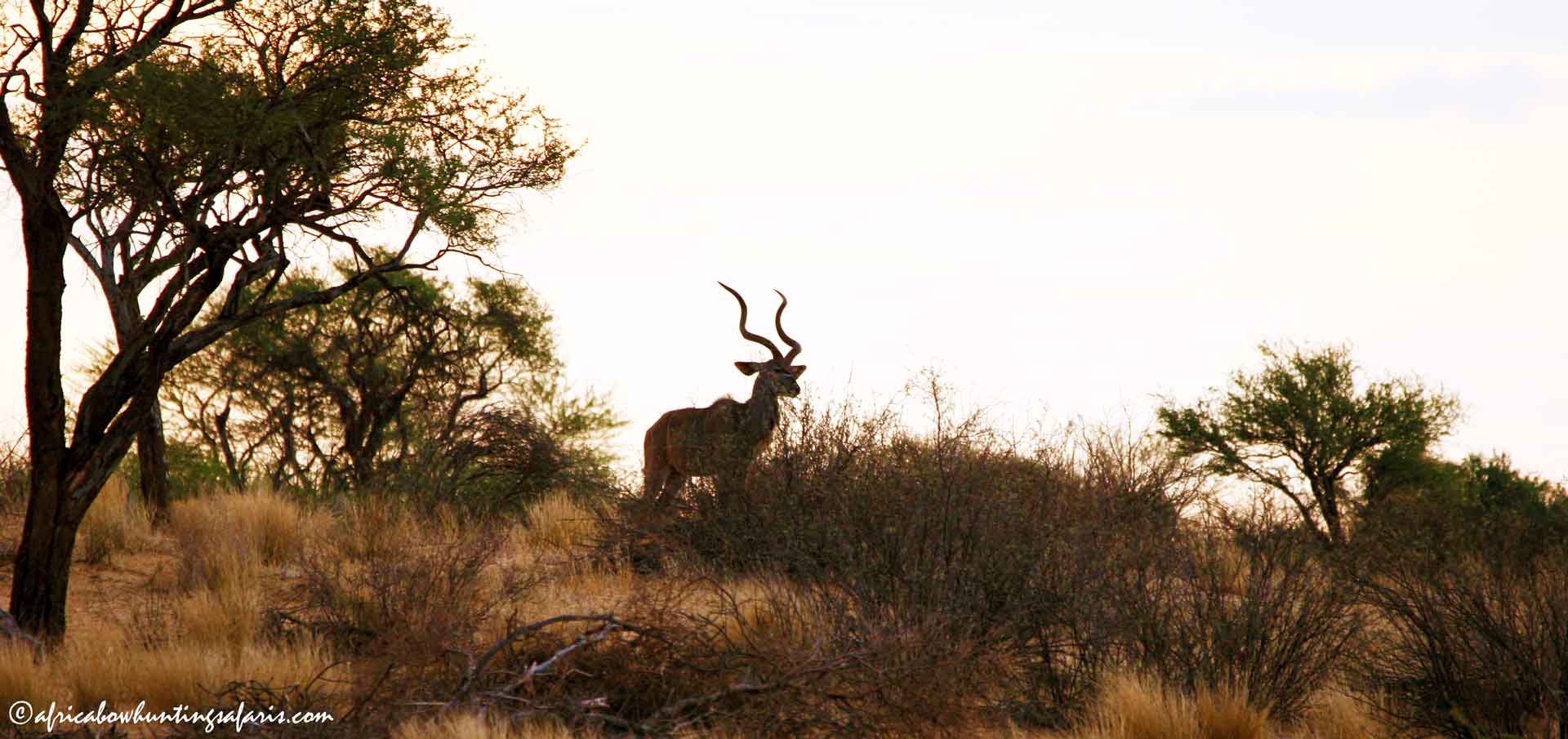
Tips for bow hunting kudu from a blind

  1. Choose a strategic location for a pop-up blind:
  • Wind direction: Your blind will be positioned downwind from potential kudu paths to avoid scent detection.
  • Visibility: A location with clear visibility of potential feeding areas, watering holes, or trails will be selected.
  • Natural cover: Natural cover like bushes or trees to camouflage the pop-up blind will be utilized.
  1. Patience is key:
  • Stay still: Avoid sudden movements or noises that could spook kudu.
  • Be prepared: Have your bow ready and your release aid attached before kudu appear.
  1. Know your target:
  • Anatomy: Study kudu anatomy, focusing on vital areas like the heart, lungs, and neck.
  • Shot Placement: Practice your aim and ensure you can consistently hit your target at various distances.
  1. Adapt to conditions:
  • Weather: Be prepared for various weather conditions, including rain, wind, and extreme temperatures.
  • Terrain: Understand the terrain and adjust your hunting strategy accordingly.
  1. Ethical hunting:
  • Clean Shots: Always strive for a clean, ethical kill.
  • Respect the Animal: Treat the kudu with respect, even if you’re unsuccessful.
  1. Practice your skills:
  • Bow shooting: Regularly practice your bow shooting skills to maintain accuracy.

By following these tips and practicing patience, you can increase your chances of a successful and ethical kudu bow hunting experience in South Africa.