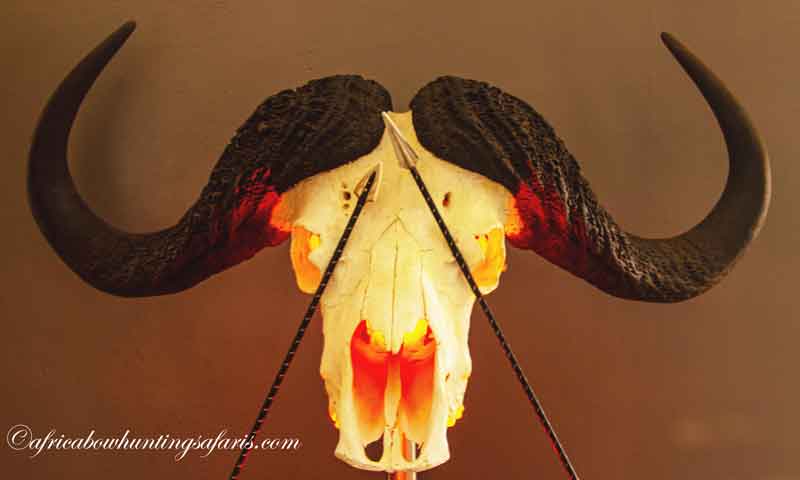
This page is dedicated to giving expert advice on the best bow hunting equipment Africa for the best bow hunting safari.
In this section we look at bows and bow types. Depending on what your personal preference is, you can hunt with a compound bow, longbow or use traditional archery equipment.
The best broad heads to use at which velocity will forever remain at a personal level of preference. No matter what you decide, read the following to form your opinion and whatever advice you need, please ask.
It does not matter if you hunt with a compound bow, longbow or with traditional archery equipment. We want to see you have the best African bow hunting safari available. You have to make sure you have the best bow hunting equipment Africa you can afford reasonably.
Pay attention to the hints and tips on shot placement, draw weight and the best arrows. Listen to what your PH has to say.
However, it is most important to use the correct broad heads when bow hunting plains game. It is vitally important to use the correct bow hunting equipment when bow hunting African dangerous game.
Once we show you the best African bow hunting trophies the rest is up to you!
All our bow hunting is conducted from pit blinds, ground hides, elevated hides and sometimes even walk-and-stalk.
Even if you have the best bow hunting equipment Africa with you, it will be worthless if you do not follow the correct advice regarding shot placement.
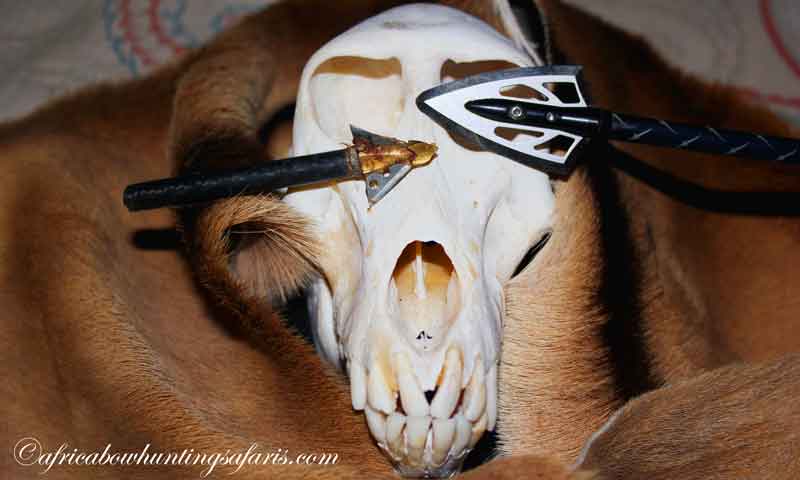
First time Africa bow hunters usually ask what is the best bow hunting equipment Africa.
The best bow for bow hunting in South Africa is by far the one you know best, shoot straight and trust. If your bow is manufactured by Bowtech, Diamond, Mathews, G5 or Hoyt, it does not matter. Know your bow and make sure you hit what you are aiming at.
There simply are no bad manufacturers of bows. Ensure your bow hunting equipment (along with shot placement) is suitable for the animal you intend hunting. Read our recommendations on minimum draw weight and kinetic energy (KE) required per trophy animal. Also take note of the South African bow hunting regulations with regards to bow hunting in South Africa further down the page.
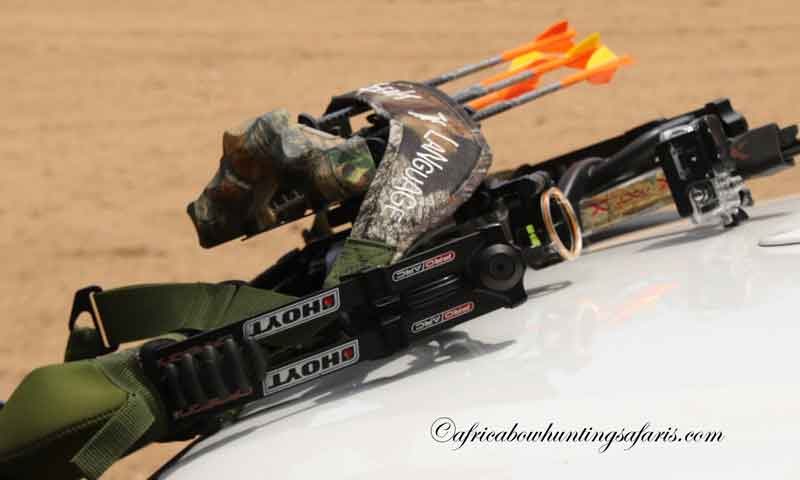
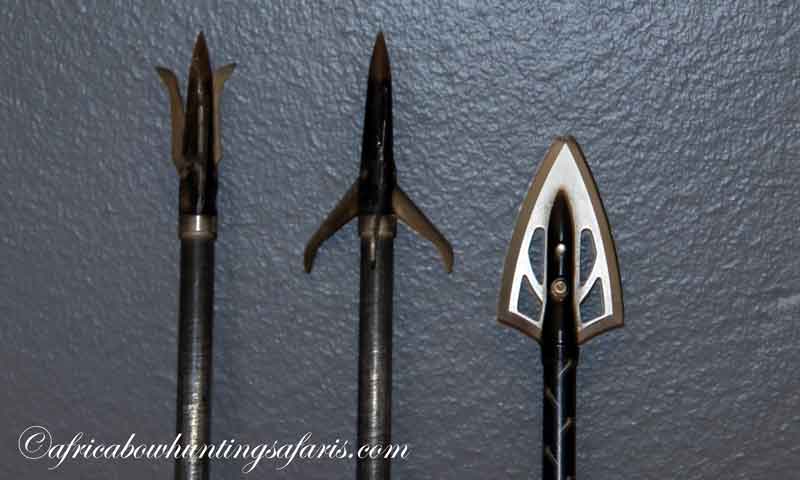
The age-old debate of mechanical vs. fixed blade broadheads continues to intrigue archers worldwide. While both types have their proponents, the optimal choice often depends on individual hunting preferences, target species, and personal experience. Let’s delve into the key characteristics and considerations for each type.
When it comes to fixed blade broadheads, the best choice is ultimately the one that suits your individual hunting style and preferences. While we may have a particular preference, it’s essential to consider your own experiences and the specific requirements of your hunts.
One crucial factor to remember is the cutting edge length. Our recommendation of at least 1 inch is based on years of practical experience and observations. This size provides adequate penetration for most African game species, ensuring a clean and ethical kill.
It’s important to note that bow hunting rhino and African elephants is strictly prohibited in South Africa. However, we do have the opportunity to hunt Cape buffalo and African lions with the necessary permits. For Cape buffalo, fixed blade broadheads are mandatory by law, emphasizing their importance for ethical hunting of this formidable animal.
Our recommendations are rooted in both practical experience and extensive research. We’ve listened to the opinions of countless hunters and analyzed numerous autopsies to gain a comprehensive understanding of broadhead performance in the field. While everyone is entitled to their own opinions, our suggestions are based on real-world evidence and a commitment to ethical hunting practices.
By carefully considering your equipment choices and following established guidelines, you can maximize your chances of a successful and responsible African bow hunting adventure.
The debate between mechanical and fixed blade broadheads for African bow hunting is an ongoing one, with no definitive answer. Both types have their merits, and the optimal choice often depends on the specific hunting situation, the target species, and the hunter’s personal preferences.
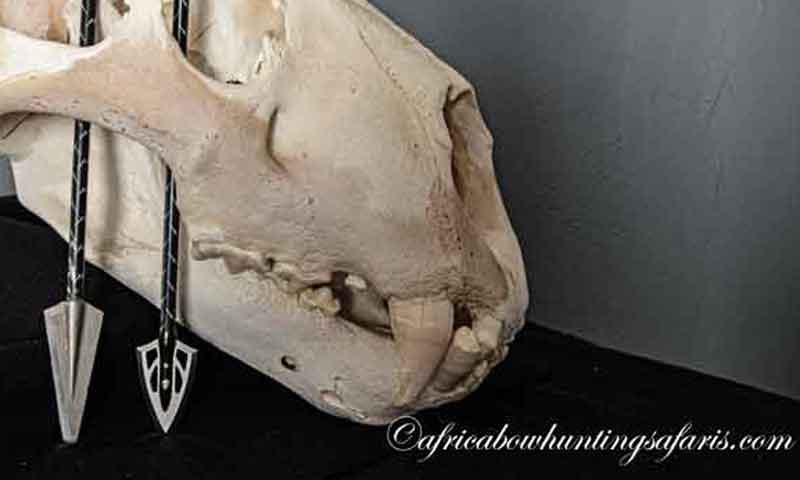
Our experience has shown that both mechanical and fixed blade broadheads can be effective for African bow hunting. In some cases, mechanical broadheads may lead to a quicker kill, as demonstrated by our encounter with a lion. However, it’s important to note that factors like shot placement and the animal’s individual physiology can also influence the outcome.
While we have experienced failed hunts with fixed blade broadheads, it’s essential to remember that misses can occur with any type of broadhead. Even the most skilled archers are not infallible.
Based on our observations, we generally recommend using fixed blade broadheads for larger African antelope species. The mass and toughness of animals like roan antelope and Cape eland can make it challenging for mechanical broadheads to penetrate deeply and deliver a lethal wound.
However, it’s worth noting that Kudu, despite being South Africa’s third-largest antelope, can be hunted effectively with mechanical broadheads. Their relatively smaller size and less dense muscle mass make them a suitable target for this type of broadhead.
Ultimately, the best broadhead for a specific hunting situation depends on a variety of factors. Hunters must consider the target species, the expected shot distance, their own skill level, and their personal preferences. By carefully evaluating these factors, archers can make informed decisions and increase their chances of a successful hunt.
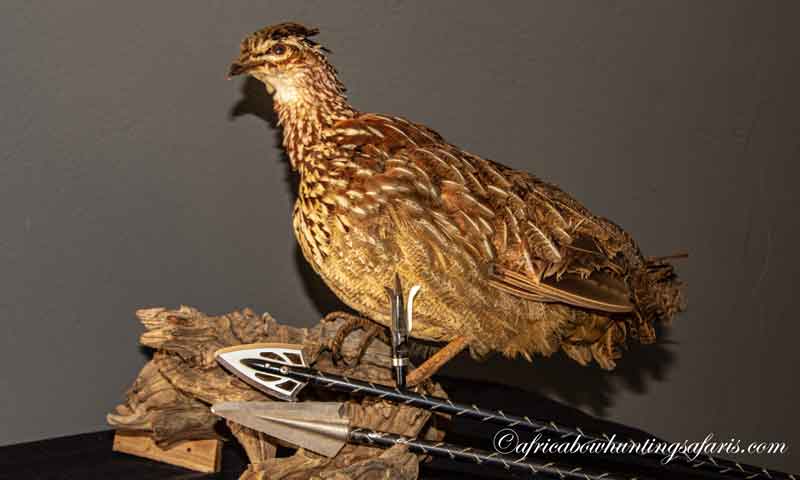
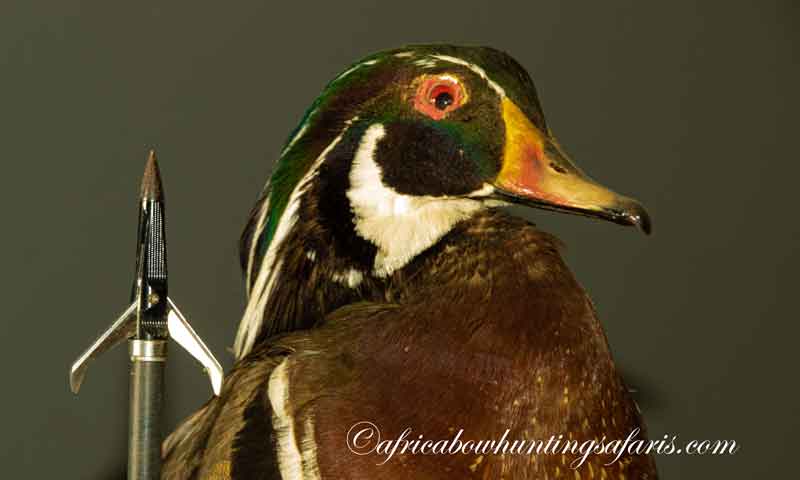
The relationship between arrow speed, kinetic energy (KE), and successful bow hunting is a complex one, often sparking heated debates among archers. While both speed and KE are important factors, a comprehensive approach that considers arrow weight, broadhead selection, and bow tuning is essential for maximizing your chances of a clean and ethical kill.
While high arrow speeds can be impressive, excessive speed can sometimes compromise penetration. Finding the right balance between speed and arrow weight is crucial.
A well-chosen broadhead can significantly impact your hunting success. Consider factors like cutting edge length, blade configuration, and weight.
A properly tuned bow ensures that your arrows fly consistently and accurately, maximizing your chances of hitting the target.
Understanding the vital areas of different African game species is essential. Remember that these areas may vary compared to North American or European game.
For specific recommendations on draw weights and KE for various African game animals, please refer to the provided link.
At Trophy Trails Outfitters, we’re dedicated to helping you achieve a successful and memorable African bow hunting experience. Whether you’re a seasoned hunter or new to the sport, we’re here to assist with equipment selection, hunting techniques, and trip planning.
Join us on your next African adventure and let us help you create unforgettable memories.