This page is dedicated to giving expert blue wildebeest bow hunting advice. We are committed to ethical bow hunting practices in the form of sustainable bow hunting, allowing us and all our future generations to continue our noble bow hunting sport.
Our team of experienced professional hunters, trackers and skinners have years of knowledge and expertise in locating and ethically hunting blue wildebeest. We believe in responsible hunting that preserves the ecosystem and ensures the survival of wildlife populations.
When you choose to hunt with us, you’re not just participating in a sport; you’re contributing to the conservation of these magnificent animals and investing in the hunting rights of our future generations.
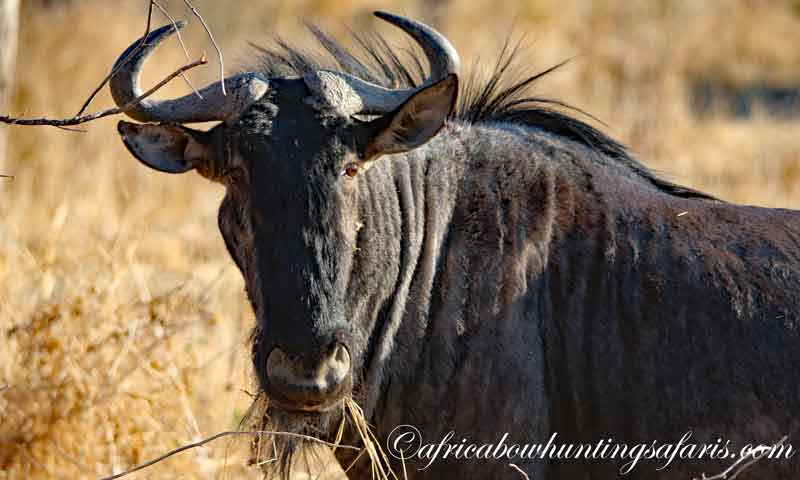
Blue wildebeest, also known as gnu, are large, muscular antelopes native to the grasslands of Southern Africa. They are easily recognizable by their distinctive, horns which curve outward and upward. Their coat is typically a bluish-gray color, though it can vary depending on the individual. Dark vertical stripes adorn the flanks earning them the name of ‘’brindled gnu / wildebeest’’.
These animals are highly social and live in large herds. They are known for their impressive migrations in East Africa, traveling hundreds of miles each year in search of food and water. Blue wildebeest are herbivores and primarily graze on grasses and other vegetation.
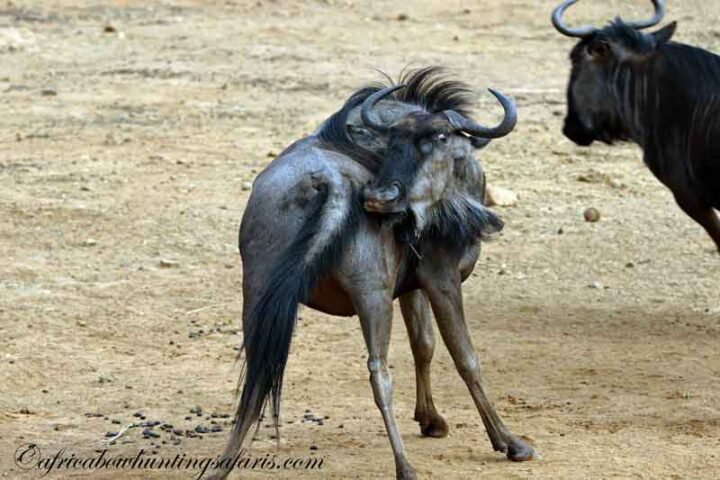
While they may seem docile, blue wildebeest can be dangerous when threatened. They are powerful animals with sharp hooves that can inflict serious injury. Hunters must approach them with caution and ensure precise shot placement to avoid unnecessary suffering.
Good luck on your blue wildebeest bow hunting adventure!
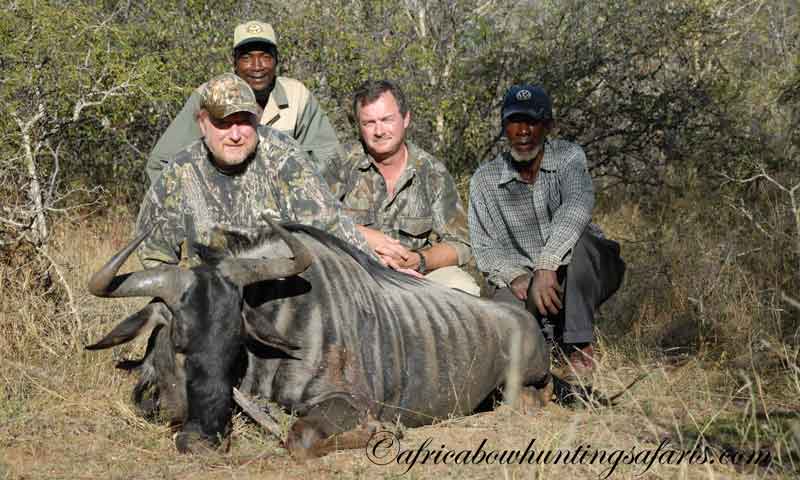
Blue wildebeest, often dubbed the “poor man’s buffalo,” are a formidable challenge for any bow hunter. These tough, resilient animals require precise shot placement to ensure a quick and humane kill.
At Trophy Trails Outfitters, our experienced guides specialize in blue wildebeest bow hunting, providing you with the knowledge and expertise needed to tackle this iconic African species. Test your skills against one of the toughest antelope in the world and experience the thrill of a successful hunt. Let us guide you to your trophy.
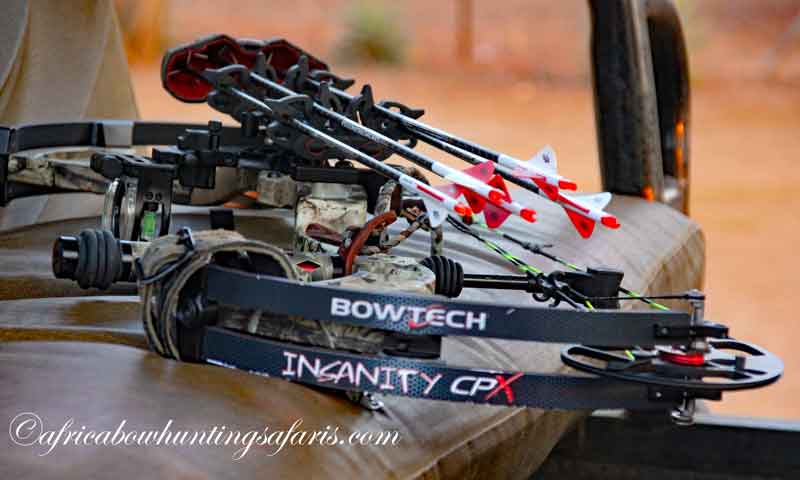
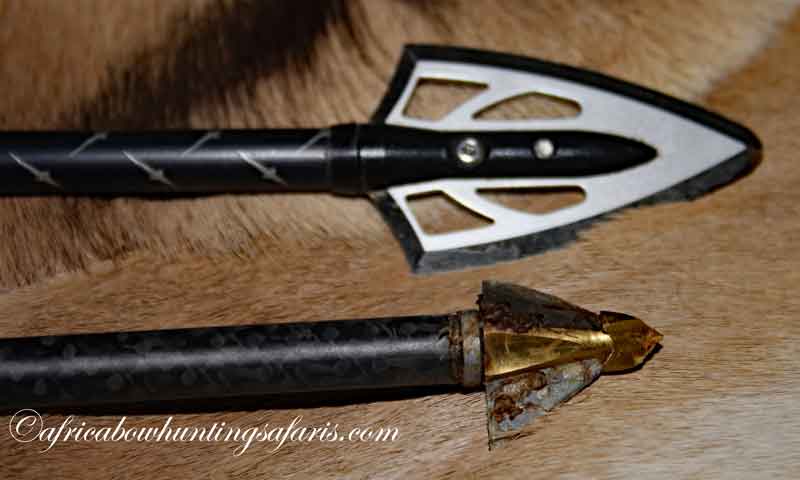
Ensure you’re equipped for a successful blue wildebeest bow hunting adventure in South Africa. This guide outlines the key considerations for selecting the right equipment, including kinetic energy, arrows, shot distance, broadheads, and draw weight. The following aspects all adhere to the South African bow hunting regulations, as set out in the: NATIONAL ENVIRONMENTAL MANAGEMENT: BIODIVERISTY ACT, 2004 (ACT NO. 10 OF 2004)


Find the combination that feels most comfortable and allows you to shoot accurate consistently. Consider factors such as:
The best blue wildebeest equipment is the equipment that works best for you. Take the time to test various options and find the setup that enhances your performance and enjoyment of bow hunting.
The Trophy Trails Outfitters blue wildebeest bow hunting price South Africa is $ 1 250.
The price range for bow hunting blue wildebeest in South Africa for the 2024 bow hunting season can vary significantly depending on several factors:
Generally, you can expect to pay between $2,500 and $4,500 for a blue wildebeest bow hunting safari in South Africa.
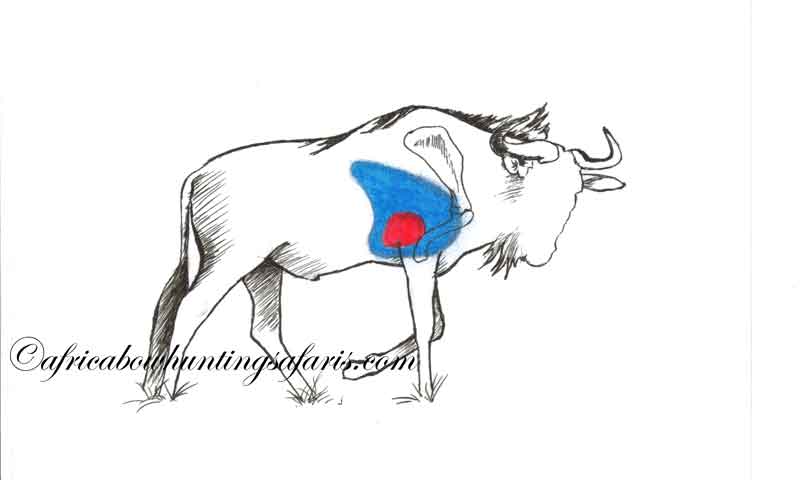
When bow hunting blue wildebeest, accurate shot placement is crucial for a clean kill and ethical hunt. Blue wildebeest are extremely tough. Here are some key considerations:
Remember: blue wildebeest are tough and resilient animals. Approach with caution, maintain a safe distance, and follow the guidance of your professional hunter.
Blue wildebeest are primarily found in the grasslands and savannas of Southern Africa, particularly in countries such as South Africa, Botswana, Namibia, and Zimbabwe. They thrive in open, grassy areas with plenty of water and vegetation.
The hunting season for blue wildebeest in South Africa typically runs from April to October. This coincides with the dry season when vegetation is less dense, making it easier to spot and stalk these animals. However, it’s essential to check with us for exact season dates as they may vary slightly based on local regulations and hunting conditions.
By following these tips, you can increase your chances of a successful and enjoyable plains game hunting experience in South Africa.

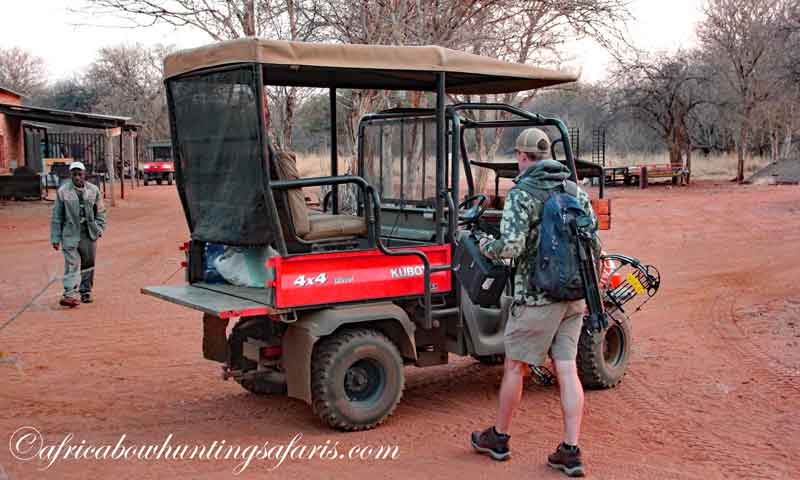
You’ll arrive at the hunting lodge where you’ll be met by the staff of the hunting lodge. Usually, the PH is the one that picks you up at the Johannesburg International Airport. They will provide you with a briefing on the local area, safety guidelines, and hunting regulations.
Your PH will assist you in preparing your hunting gear and ensuring you have everything you need for your safari.
PH’s will use their expertise to locate suitable hunting areas and provide guidance on shot placement and ethical hunting practices.
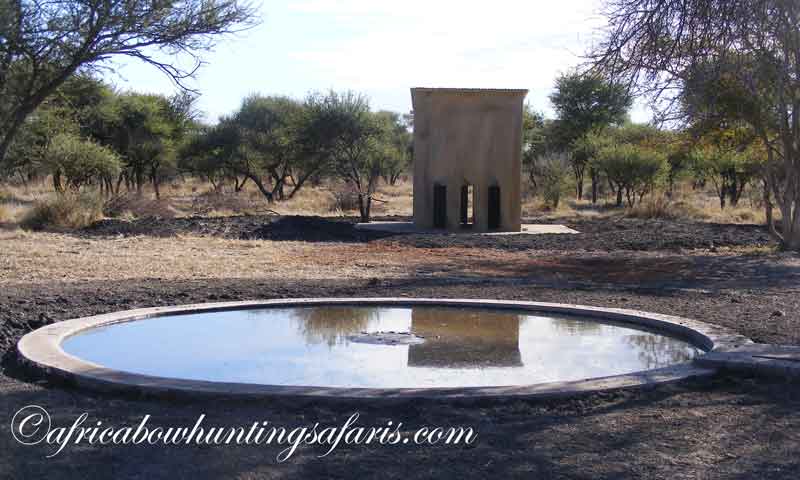
In addition to hunting, you’ll have the opportunity to enjoy game viewing other wildlife in their natural habitat from the comfort of your blind. Bring a good camera and a video camera.
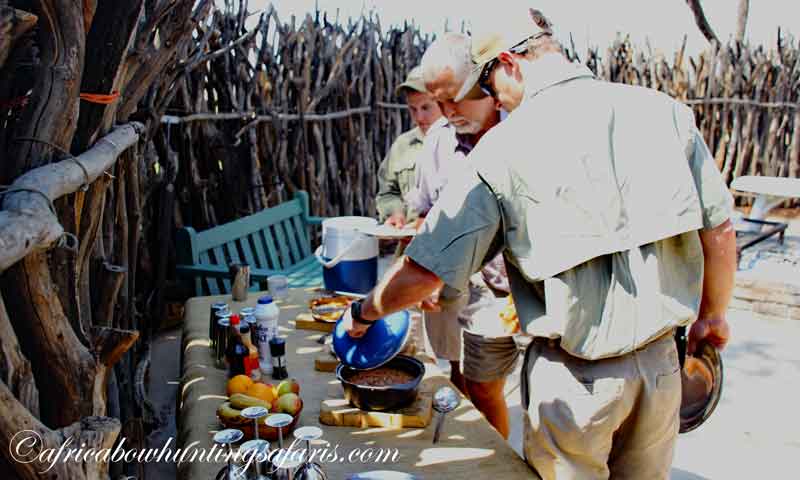
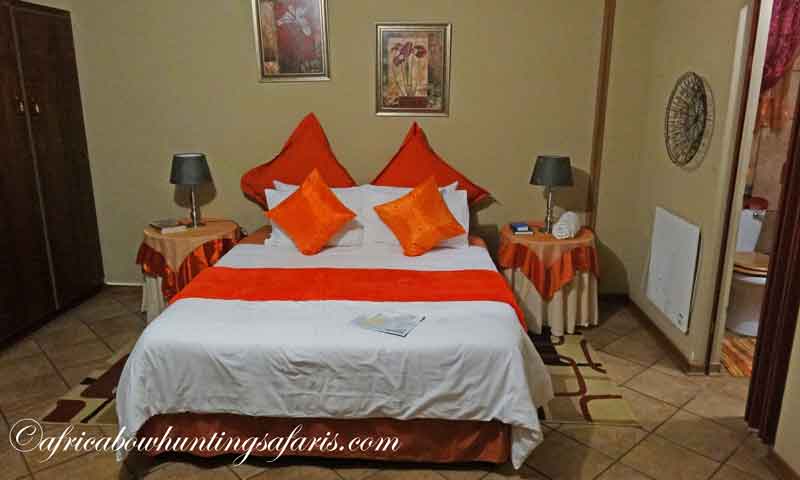
You’ll stay at a comfortable hunting lodge, often with amenities such as swimming pools, game viewing platforms, and dining areas. Alternatively you can decide to upgrade to Five Star amenities without compromising hunting quality.
Your successfully hunted blue wildebeest will be prepared for delivery to the taxidermist.
Overall, a blue wildebeest bow hunting experience in South Africa offers a unique combination of adventure, wildlife encounters, and the opportunity to contribute to conservation efforts.
By choosing our services, you can expect a memorable and ethical bow hunting experience in South Africa.